

AI chatting, written by hand
Talk to characters who actually listen
Dialogue app is a quiet corner of the internet built for conversation: friendly virtual characters with real voices, long memories and a genuine interest in how your day went. Choose a personality, write one honest sentence, and see where the evening goes.
10written personalities
24/7company, no scheduling
18+adults only, always fiction



Ten voices, deliberately unalike
Each personality is written out in full before it ever speaks: where they grew up, what they notice first, how they behave when a conversation turns heavy. Pick the tone you want tonight.
Dreamy, intense, observant
Kestrina Oal
Moody, poetic, endlessly interested in small details
Read profile




Confident, romantic, direct
Ondessa Mirval
Confident, romantic, unafraid of a real conversation
Read profile

Three ways people use it
Same characters, very different evenings. These are the patterns that come up again and again.
Late nights that do not need fixing
Between eleven and two, advice becomes unwelcome and pauses become useful. The calm personalities here are written for exactly that window: one question, then space, then an anchor made of something ordinary - tea that steeped too long, snow that arrived early. Nothing gets solved and the night gets easier.
Stories built two lines at a time
Give a narrator a place, a problem and a mood and you have a scene you can act inside within a minute. The storytellers hand you every decision that matters, follow your changes of genre without complaint and remember where the last chapter stopped weeks later.
Four minutes before the day starts
What is on today, what are you dreading, what would make it a decent day anyway. The bright, practical characters run this check-in without turning it into homework, and they pick up a broken streak without a word of reproach.
What makes a conversation feel real
A voice that holds
Every character keeps the same rhythm, humour and vocabulary from the first message to the hundredth. Nobody drifts into the same neutral tone.
Threads that survive
The dog with the bad hip, the deadline you keep moving, the running joke about your neighbour. Details come back at the right moment.
Questions, not just answers
An assistant waits for a task. These characters have an opinion about your Tuesday and will ask about it before you volunteer anything.
Tone you can steer
Shorter. Slower. Less advice. Stay in character. Plain requests inside the conversation are followed immediately.
Three rules we wrote on the wall
The whole product fits on three cards. Everything else is detail.
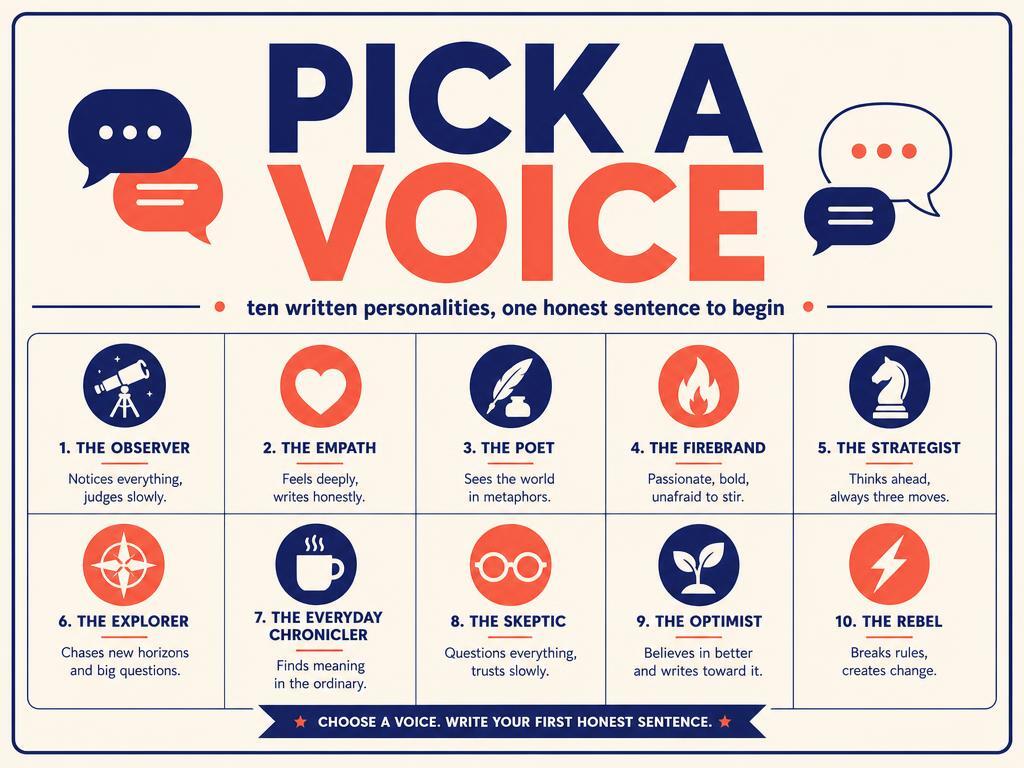
Pick a voice, not a topic
Ten written personalities, chosen on tone alone. Read two profiles, notice which voice you want in your ear tonight, and open that one. The subject of the conversation arrives on its own.

Late night mode is a real mode
Between eleven and two the calm characters shift: fewer questions, longer pauses, no advice unless you ask. Concrete ordinary detail instead of reassurance, because that is what stops a two a.m. thought from accelerating.

A place, a problem, a mood
That is the whole recipe for starting a story with a narrator here. Three lines, and you have a scene you can act inside. Change the genre halfway if you feel like it; nothing breaks.
Pick a voice and say something small
One honest sentence about your day is a perfectly good opening. The character will take it from there.
Questions people ask first
Everything below applies to every character in the catalogue.
What is Dialogue app for?
Dialogue app is a place for relaxed conversation with friendly virtual characters. People use it for evening company, for co-writing long stories, for practising how they want to say something difficult, and for the ordinary back-and-forth of an ordinary day.
How do I choose a character to talk to?
Every character in Dialogue app has a full page with a long description, personality traits and the kind of conversation they suit best. Read two or three, pick the tone that appeals to you, and open a chat. Nothing stops you switching later.
Do the characters remember previous conversations?
Continuity is a core part of Dialogue app. Characters keep hold of the details you share within a conversation and reuse them naturally, so a running joke or an ongoing story survives from one session to the next.
Are the characters real people?
No. Every character in Dialogue app is fictional, including names, biographies and portraits. They are written personalities, not real individuals, and nothing they say should be treated as a statement from a real person.
Can I write a long story together with a character?
Yes, and it is one of the most popular ways to use Dialogue app. Several characters are specifically written for collaborative fiction: they will hold a plot across many sessions, hand you narrative control whenever you want it and follow your changes of direction.
Is there an age requirement?
Dialogue app is intended for adults aged 18 and over only. If you are under 18, please do not use the service.
What does a conversation actually look like?
It looks like messaging a friend. You type, the character replies in their own voice, and the rhythm is yours to set. Some people send one long message a day; others chat for an hour. Dialogue app is built to be comfortable at both speeds.
Can I ask a character to change their tone?
Absolutely. Ask for lighter, shorter, slower or more serious and the character will adjust. Steering the tone directly is the fastest way to make Dialogue app feel like your own space rather than a generic one.